
HEPA filter replacement frequency in cleanrooms should be condition-based, not calendar-only. A filter should be replaced when pressure drop, airflow, integrity test results, contamination events or maintenance history show that it can no longer support the room requirement.
Some cleanrooms run for years on a stable filter set, while others need earlier replacement because of process load, pre-filter neglect, construction dust or high operating hours. Buyers should plan monitoring and maintenance from the start so filter decisions are based on evidence rather than habit.
Replacement Is Condition-Based
A fixed replacement interval is easy to manage, but it may waste good filters or miss filters that are failing early. HEPA filters should be evaluated by performance trend, not only by the date printed in a maintenance plan. A filter that still holds airflow, pressure and integrity may continue to perform safely.
Pressure trend, airflow balance, leakage test results and production risk should all be reviewed before replacement decisions. The maintenance team should keep the commissioning baseline, routine readings and corrective action history together. Without trend data, replacement becomes guesswork and may create unnecessary shutdowns.
Pressure Drop and Airflow Signs
As filters load with particles, pressure drop rises. If the fan cannot maintain design airflow, the room may lose recovery performance, temperature stability or pressure cascade control. Operators may notice longer recovery after door opening, unstable room pressure or airflow alarms before a filter reaches its final resistance.
Record initial resistance so future readings have a meaningful baseline. The useful question is not only whether the resistance is high, but whether it is rising faster than expected. A sudden increase may point to upstream filter failure, construction dust, process change or blocked airflow path.
Integrity Test Results
A filter that fails leakage testing may need repair, resealing or replacement. The cause can be damaged media, gasket failure, poor installation or housing leakage. Replacing the filter without identifying the failure mode can leave the real leak in the housing or seal system.
Integrity testing is especially important after filter replacement, ceiling work, transport damage or cleanroom modification. A filter certificate proves factory performance, but it does not prove that the installed filter assembly is leak-free. The installed condition must be checked as part of validation or recertification.
Production Environment Factors
Process dust, packaging particles, frequent door opening and weak pre-filtration can shorten filter life. Food, powder, packaging and high-traffic support areas often load filters differently from quiet laboratories or assembly rooms. The maintenance plan should reflect the actual contamination load.
Good pre-filter and medium filter maintenance protects expensive terminal HEPA filters and keeps airflow more stable. If upstream filters are ignored, terminal HEPA filters become the first real defense against dust and may reach high resistance earlier. This increases energy cost and can shorten the useful life of the cleanroom system.
Replacement Planning
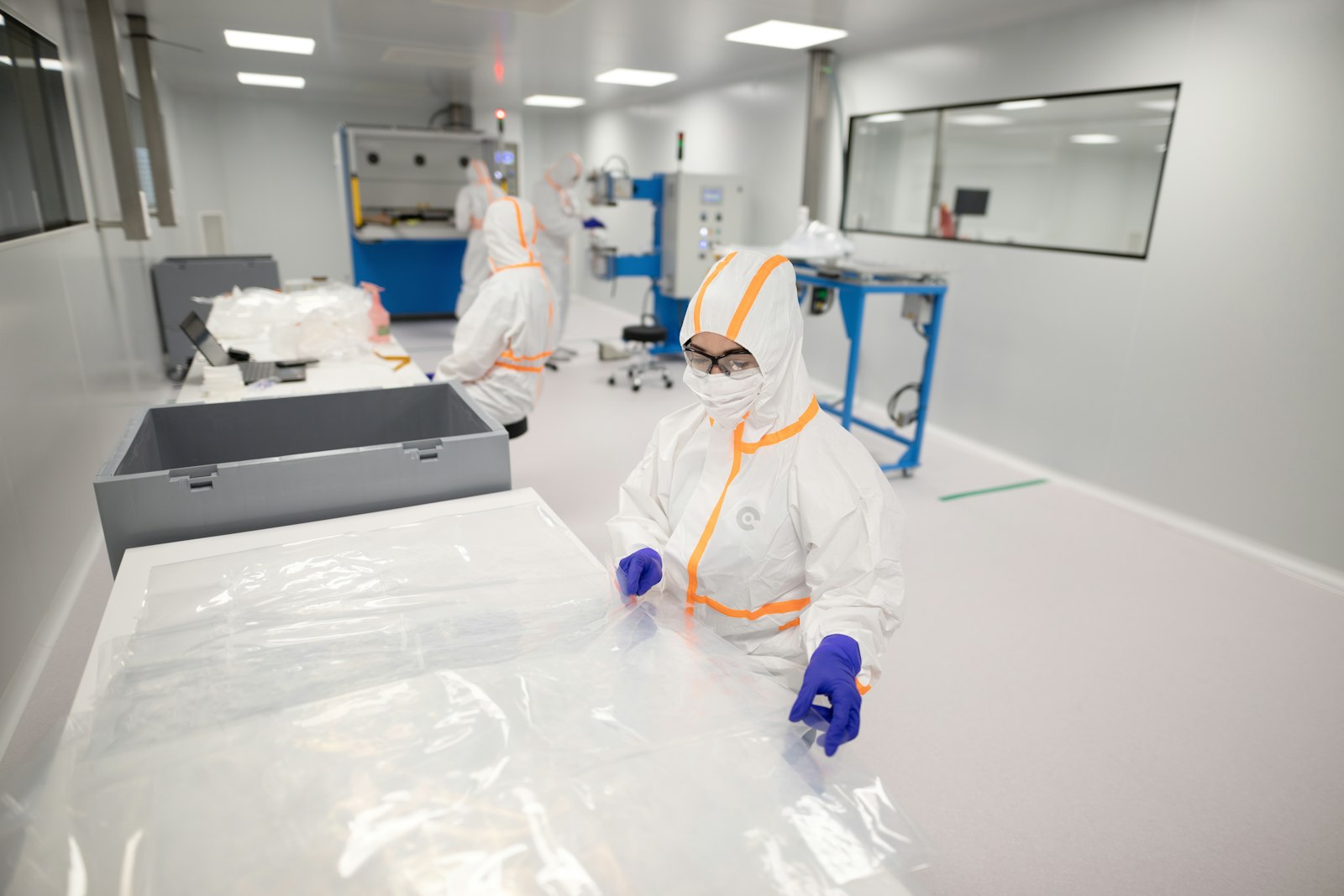
Replacement planning should include spare filters, downtime, rebalancing and retesting. The project team should know how long replacement takes, who performs the work and what evidence is needed before the room returns to production.
- Track pressure drop and airflow after commissioning.
- Inspect pre-filters and medium filters regularly.
- Retest after filter replacement or ceiling work.
- Keep spare filters for critical rooms.
Hurricane Techs Recommendation
Build a maintenance plan that links pressure trend, airflow checks and integrity testing. A filter should be replaced because evidence shows performance risk, not because the maintenance file has no better decision rule.
Hurricane Techs supports maintenance and recertification, HEPA filters and cleanroom validation for facilities that need practical replacement planning and documented room performance.
FAQ
Can HEPA filters be washed?
Most cleanroom HEPA filters are not washable. Follow the filter manufacturer instructions.
What pressure drop means replacement?
The limit depends on the filter and system design. Use the supplier's recommended final resistance and room airflow requirement.
Should filters be replaced after failed leakage testing?
Sometimes. First identify whether the issue is media damage, gasket leakage or installation failure.


