
GMP cleanroom requirements are a risk-based system for controlling contamination during pharmaceutical manufacturing—not merely an ISO particle-classification target. A compliant design connects premises, HVAC, utilities, equipment, personnel, material movement, cleaning, environmental monitoring, maintenance, qualification and quality oversight to the product and process.
The correct specification therefore begins with the manufacturing operation. Sterile filling, component preparation, weighing, formulation, packaging and non-sterile production have different contamination risks. The project team must identify where product is exposed, what must be protected or contained, how people and materials move, and what evidence will demonstrate continued control after handover.
GMP Cleanroom Requirements at a Glance
| Requirement areaWhat the cleanroom specification should defineTypical acceptance evidence | ||
| Process and contamination risk | Product exposure, interventions, contamination sources and containment hazards | Risk assessment and contamination control strategy |
| Zoning and flow | Room grades/classes, personnel, material, waste and maintenance routes | Approved layouts, flow diagrams and room schedule |
| HVAC and filtration | Airflow concept, filtration, pressure relationships, temperature, humidity and recovery | Commissioning, balancing, integrity and performance reports |
| Construction and cleanability | Surfaces, joints, penetrations, doors, ceilings and equipment interfaces | Material certificates, inspections and cleanability review |
| Operation | Gowning, cleaning, disinfection, transfer, monitoring and alarm response | SOPs, training, records and trend review |
| Qualification | DQ/IQ/OQ/PQ scope, test states, acceptance criteria and deviations | Approved protocols and traceable final reports |
| Lifecycle control | Maintenance access, calibration, requalification and change control | Preventive-maintenance plan and quality-system records |
The details vary by market, product and dosage form. The EU GMP Annex 1 framework is especially important for sterile medicinal products and emphasizes a facility-wide contamination control strategy (CCS). FDA guidance and national GMP requirements may use different terminology or specific expectations. The owner must identify the regulations and standards that apply to the actual manufacturing license and destination market.
GMP Cleanroom vs ISO 14644 Classification
ISO 14644 cleanroom classification defines airborne-particle cleanliness and related test concepts. It is important evidence, but it does not by itself establish microbial control, sterile-process protection, cleaning procedures, gowning, material status control, utility quality, environmental monitoring limits or deviation management.
GMP asks whether the complete facility and quality system control the risks to the product. An area may pass its ISO particle count while still having a poor personnel route, an uncleanable equipment interface, an uncontrolled transfer step or inadequate environmental monitoring. Conversely, the room grade and ISO class should not be selected by copying another factory; they must match the process and regulatory basis.
| QuestionISO 14644 classificationGMP contamination control | ||
| Primary focus | Airborne particle concentration and cleanroom performance testing | Product quality and contamination risk across facility, process and operation |
| Room state | As-built, at-rest or operational as specified | Qualified states plus actual process and monitoring expectations |
| Microbial control | Not defined by ISO 14644-1 particle class | Required where relevant to the pharmaceutical process |
| People and materials | Can affect classification but are not fully prescribed by the class number | Routes, gowning, transfer, cleaning and behavior are part of the control strategy |
| Lifecycle | Classification and monitoring framework | Qualification, monitoring, deviation, maintenance, change control and quality oversight |
Build the Contamination Control Strategy Before the Layout
The CCS should not be written after the rooms are already drawn. Begin by mapping contamination pathways through the process: exposed product, sterile components, operators, raw materials, samples, tools, mobile equipment, waste, cleaning equipment and maintenance access. Identify where interventions occur and where an error could affect product quality.
This risk map should shape room boundaries, airlocks, transfer devices, barriers, local clean-air protection, pressure direction, return-air locations, monitoring points and cleaning provisions. If routine procedures must constantly compensate for a confusing layout, the design has transferred risk to operator behavior.
A useful strategy also distinguishes contamination prevention from detection. HEPA filtration, closed transfer and personnel segregation prevent contamination; particle and microbial monitoring may detect a loss of control. Both are necessary, but monitoring cannot compensate for a weak facility or process design.
Zoning, Personnel Flow and Material Flow
Pharmaceutical cleanrooms should use a logical progression from uncontrolled or lower-control areas toward cleaner and more critical zones. Personnel changing should support the required gowning sequence without mixing clean and used garments. The route should provide enough space and time for correct behavior under actual staffing levels, not only during an empty design review.
Materials need defined entry, status and exit routes. Raw materials, cleaned equipment, sterile components, samples, waste and rejected items should not share uncontrolled crossings. Pass boxes, material airlocks or transfer hatches can reduce unnecessary personnel movement, but their size, interlocks, cleaning method, cycle time, load capacity and maintenance access must fit the real workload.
Separate personnel and material routes where the process risk requires it. Also plan abnormal routes: equipment breakdown, spill response, waste removal, filter replacement and maintenance tools. A facility that works only under ideal flow will create workarounds during normal operation.
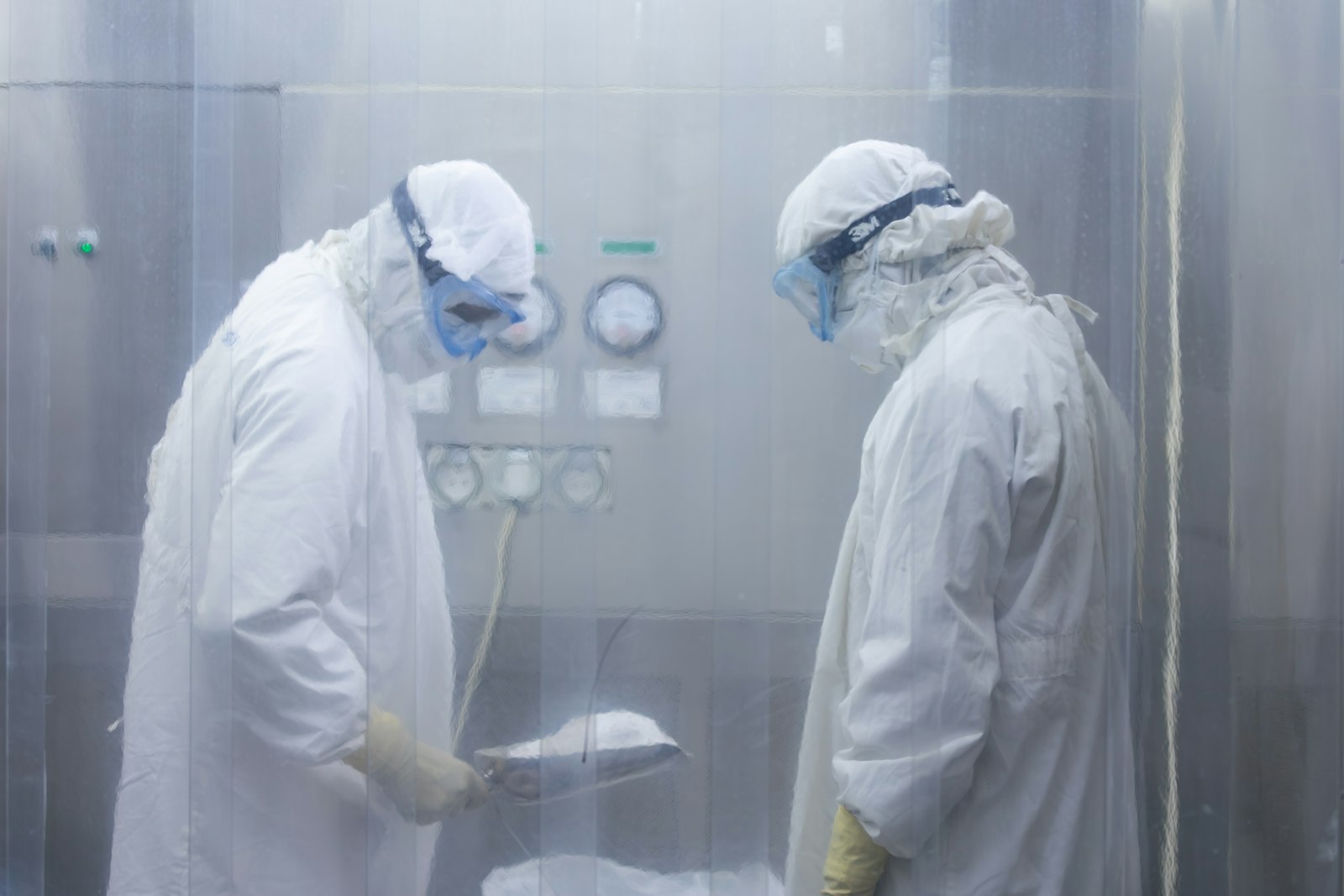
GMP cleanroom planning should connect zoning, gowning and material flow with the room pressure strategy. Photo: Shanjir H | Photo4life AU / Unsplash
Product Protection vs Hazard Containment
Positive pressure is commonly used to protect a clean product area from adjacent less-clean spaces. Negative pressure may be necessary for potent, sensitizing, infectious or otherwise hazardous materials. Some pharmaceutical suites need both objectives in different parts of the process.
The design should explain how barriers, local exhaust, pressure cascades, airlocks and safe-change filters resolve competing risks. It is not enough to label an entire facility “positive” or “negative.” Each boundary should have a defined direction and purpose, and the solution should consider product, operator and environmental protection together.
Where containment conflicts with product protection, local enclosures, isolators, closed processing or pressure sinks may be more reliable than trying to solve every risk with room pressure alone. The final strategy should be reviewed by process, EHS, engineering and quality stakeholders.
HVAC, Airflow, Pressure and HEPA Filtration
The HVAC system must support the process in the specified room state. The design basis should include occupancy, equipment heat, process emissions, fresh-air demand, exhaust, recovery expectations, room leakage and future operating modes. Air changes per hour can be a useful design parameter, but a copied ACH value does not prove adequate distribution or contamination removal.
Supply and return locations should control critical contamination pathways and avoid dead zones or short-circuiting. Local unidirectional airflow or an ISO 5 zone may be required where exposed sterile product or components need stronger protection. The background room and local protection should be assessed as one system.
Cleanroom pressure differential control should be defined room by room. The schedule needs direction, target, tolerance, monitoring point and alarm logic. Door opening, transfer operations, process exhaust, leakage and recovery must be considered; a stable reading with every door closed does not prove that the cascade remains useful during routine production.
Terminal HEPA filtration is common, but filter grade alone does not establish GMP readiness. Specify housing, sealing, replacement access, prefiltration, airflow and installed HEPA filter integrity testing. The factory filter certificate and the site leak test should be separate, traceable deliverables.
Cleanable Construction and Maintenance Access
Walls, ceilings, floors, doors, windows and service penetrations should be smooth, sealed, durable and compatible with the selected cleaning and disinfection agents. Joints and transitions should avoid ledges, open gaps and inaccessible cavities. Flooring details should support cleaning at walls, columns, equipment bases and drains where present.
Material selection should also consider impact resistance, fire performance, moisture, chemical exposure, repairability and long-term seal integrity. A surface that looks clean at handover can become a contamination risk if coatings crack, joints open or cleaning chemicals damage the finish.
Maintenance access is part of cleanability. Filters, dampers, sensors, coils, valves, lights and controls should be serviceable without repeatedly entering critical rooms or opening validated boundaries. Equipment placement should allow cleaning around and beneath it. Utility panels and access hatches need seals and procedures that preserve the room state after work.
Utilities and Process Equipment Interfaces
Clean utilities, process gases, water, steam, compressed air, vacuum and drainage can become contamination pathways if their quality, routing or points of use are not defined. The cleanroom URS should identify utility quality, monitoring, sanitization, material, slope or drainage needs and responsibilities at each equipment interface.
Process equipment can obstruct airflow, generate heat and particles, require exhaust or create inaccessible cleaning areas. Final equipment dimensions and operating states should be coordinated before HVAC balancing and qualification. Late penetrations through panels or ceilings can compromise sealing and delay validation.
Qualification, Monitoring and Lifecycle Control
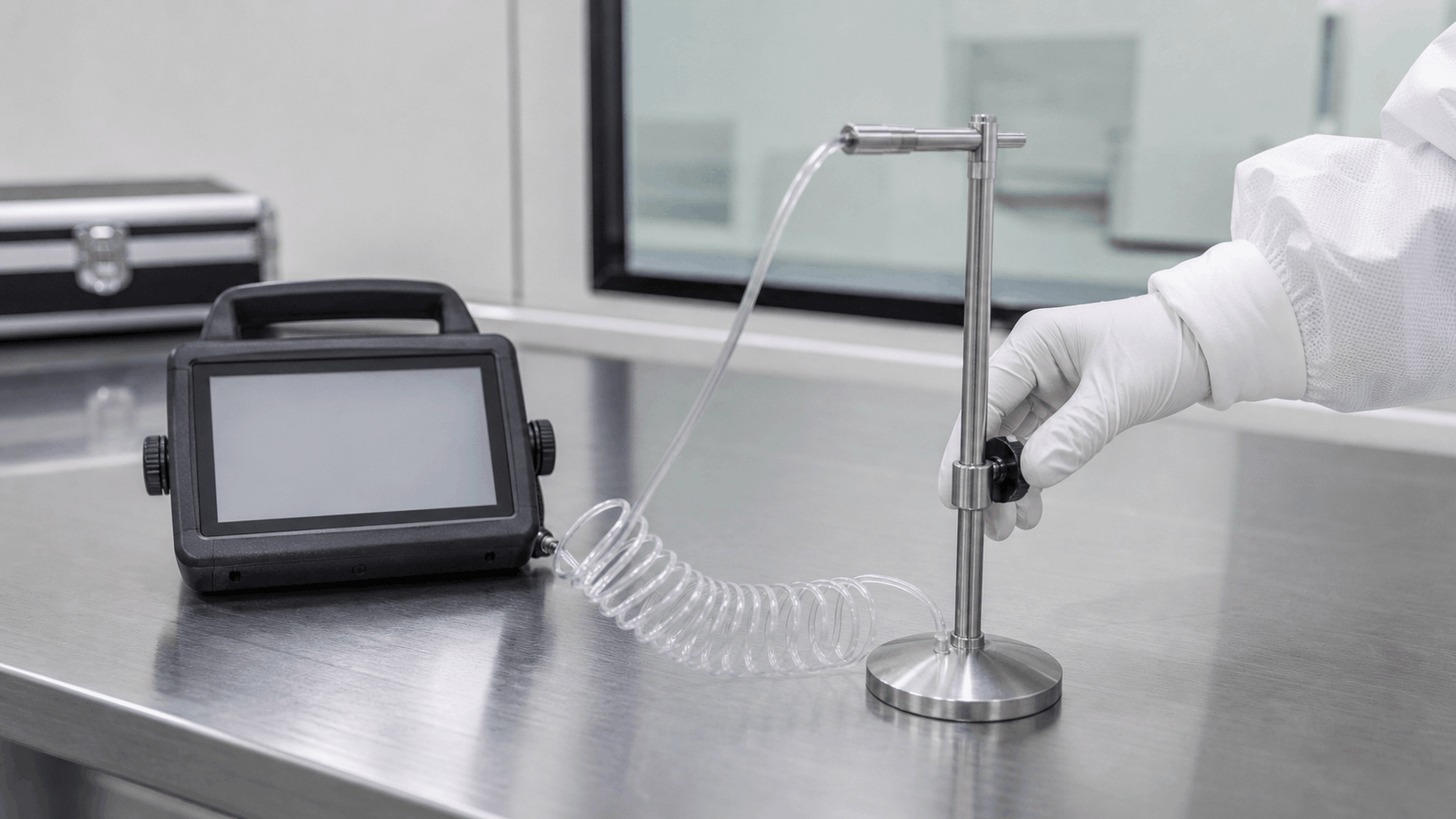
Qualification should verify that the installed facility performs against approved requirements. Depending on the process and governing program, the package can include airflow volume or velocity, room pressure, HEPA integrity, airborne particle classification, airflow visualization, temperature, humidity, recovery, alarms and utility tests.
Environmental and process monitoring then provide ongoing evidence that the facility remains in control. Monitoring locations, frequency, alert/action levels, data review and investigation procedures should be scientifically justified by risk. Classification is a periodic snapshot; monitoring, maintenance and operating records show what happens between classifications.
Change control should assess filter replacement, HVAC adjustment, equipment relocation, wall or ceiling work, process changes, occupancy changes and new transfer routes. The assessment should determine which commissioning or qualification tests must be repeated.
GMP Cleanroom Handover Documents
| Document groupExamplesBuyer check | ||
| Requirements and design | URS, risk assessment, CCS, design qualification, room schedule and calculations | Requirements are traceable to design decisions |
| Drawings | Approved and as-built layouts, pressure cascade, airflow, utilities and controls | As-built condition matches the validated installation |
| Materials and equipment | Certificates, datasheets, filter reports, calibration and equipment IDs | Records map to installed items |
| Installation and commissioning | Inspection checklists, duct tests, balancing, control sequences and alarm checks | Deviations and corrections are closed |
| Qualification | DQ/IQ/OQ/PQ protocols and reports where applicable | Methods, states, instruments and acceptance criteria are clear |
| Operation and maintenance | SOPs, cleaning, training, preventive maintenance, spares and requalification plan | The owner can sustain control after handover |
Agree the deliverable index before procurement. If the contract does not assign responsibility for protocols, calibration records, as-built drawings, deviations and final reports, the physical room can be complete while GMP handover remains delayed.
Common GMP Cleanroom Specification Mistakes
- Asking only for an ISO class. The request omits microbial control, process risk, operating state and GMP lifecycle requirements.
- Writing the CCS after design. Risk controls become explanations for fixed decisions instead of inputs to the layout.
- Combining product protection and containment without analysis. Pressure directions conflict and create uncontrolled transfer paths.
- Ignoring door and transfer events. Static pressure passes while normal operations repeatedly reverse airflow.
- Comparing quotes without validation scope. A lower price may exclude balancing, integrity tests, protocols, calibration and final reports.
- Leaving equipment interfaces unresolved. Late exhaust, heat load and utility penetrations disturb validated conditions.
- Designing maintenance through critical rooms. Routine service repeatedly opens controlled boundaries and increases downtime.
Information to Include in a Supplier RFQ
For comparable proposals, provide the product and process description, applicable market and GMP basis, room grades or ISO classes, room states, occupancy, equipment list, personnel/material/waste flows, containment hazards, temperature and humidity limits, exhaust and utility loads, pressure relationships, monitoring requirements, qualification scope and document language.
Also state whether the supplier is responsible for design only, equipment supply, construction, commissioning, qualification support or a turnkey package. Define exclusions and interfaces with process equipment, building services and the owner’s quality team.
Hurricane Techs supports GMP cleanroom design and consulting, HVAC integration, construction, commissioning and validation testing for pharmaceutical and regulated manufacturing projects. A process-based URS allows the design and quotation to address the actual contamination risks rather than only a room-class label.
FAQ
What are GMP cleanroom requirements?
They are the facility, process, operational, monitoring, qualification and quality-system controls required to prevent contamination and protect pharmaceutical product quality. The exact requirements depend on the product, process and governing regulation.
What cleanroom class is required for pharmaceutical manufacturing?
There is no single class for all pharmaceutical work. The required grade or ISO class depends on whether the product is sterile, where it is exposed, the operation performed, the contamination risk and the applicable GMP framework.
Is ISO 7 the same as GMP Grade C?
They should not be treated as interchangeable labels. ISO 7 defines a particle concentration class, while GMP grades are part of a wider pharmaceutical contamination-control and monitoring system. The required state and limits must be stated explicitly.
Does GMP require HEPA filtration?
HEPA-filtered supply air is common and is expected in many sterile and controlled pharmaceutical areas, but compliance depends on the full system: filter grade and housing, airflow, pressure, integrity testing, monitoring, cleaning and process controls.
What is a contamination control strategy?
A CCS is a documented, facility-wide strategy that identifies contamination risks and connects controls across premises, equipment, utilities, people, materials, processes, cleaning, monitoring, maintenance and quality oversight.
What should a cleanroom contractor provide at handover?
The agreed package should include approved and as-built drawings, specifications, material and equipment records, commissioning data, calibration records, qualification protocols and reports, deviations, operating manuals, maintenance plans and training records as applicable.


